

Professional Guidelines for AI Therapy and How to Actually Implement Them
What AI Therapy Solutions is doing to ensure professional compliance

The Guidance We've Been Waiting For
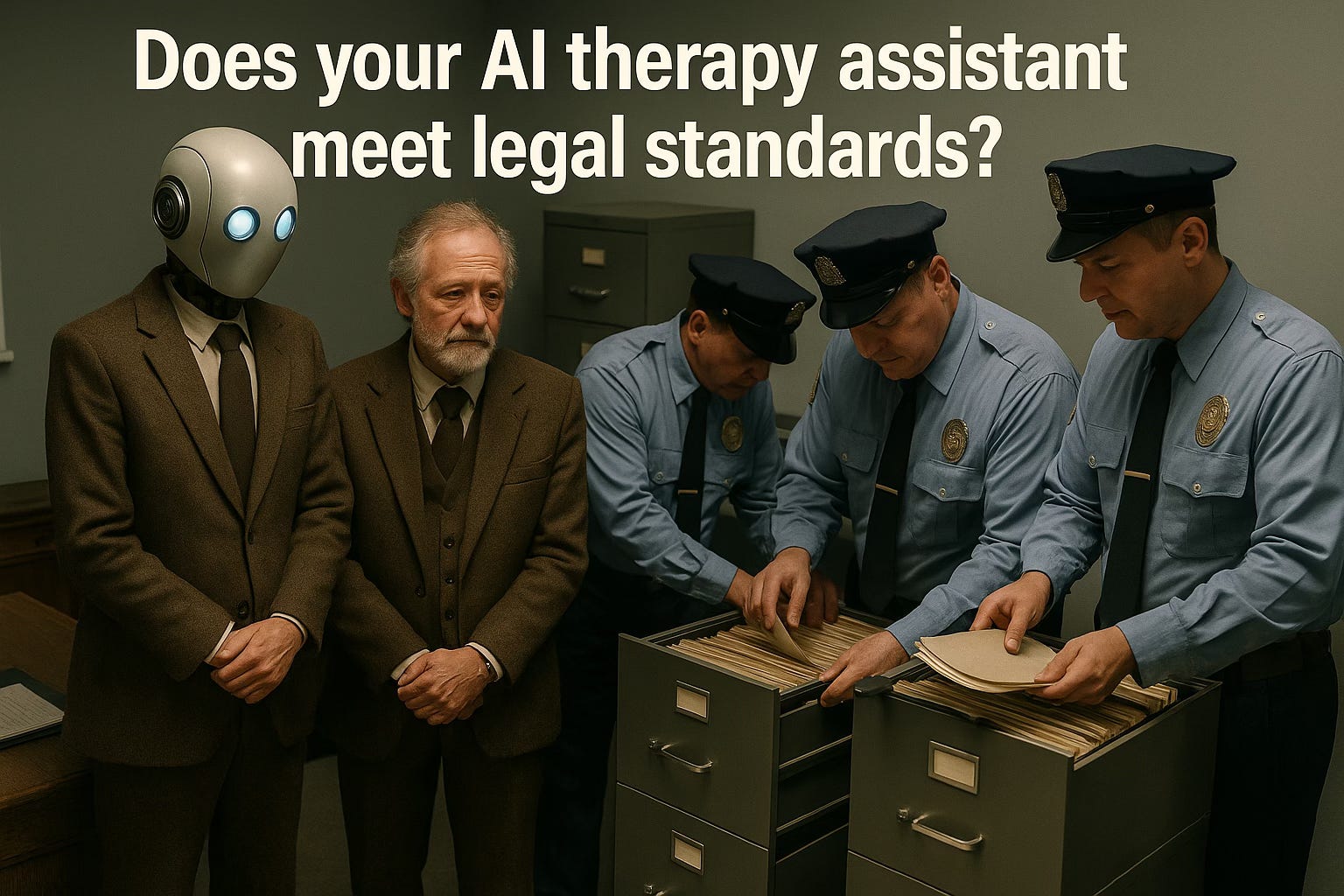
After years of watching AI therapy tools proliferate without clear professional direction, major mental health organizations have finally issued comprehensive guidelines. The American Counseling Association (ACA) and American Psychological Association (APA) have released detailed recommendations that every practicing therapist needs to understand—because ignorance is no longer a professional option.
But here's the problem: most AI therapy platforms weren't built with these professional standards in mind.
While organizations set ethical guidelines, the technology to actually implement them responsibly has been missing. That's exactly the gap AI Therapy Solutions was designed to fill.
What the Professional Organizations Demand
The ACA's Non-Negotiables:
AI as Tool, Not Therapist: Professional oversight must be maintained at all times
Competence Requirements: Therapists must fully understand any AI they use
Transparent Client Consent: Complete disclosure about AI involvement
Human Accountability: Clinical responsibility cannot be delegated to algorithms
Bias Prevention: Active monitoring for discriminatory AI responses
The APA's Core Principles:
Beneficence and Nonmaleficence: AI must help, never harm
Professional Integrity: Complete transparency about technology use
Respect for Client Rights: Including the right to human-only treatment
Cultural Competence: Special attention to AI's impact on diverse populations
The guidelines are clear. The question is: how do you actually implement them in practice?
The Implementation Challenge
Most therapists reading these guidelines face the same problems:
"How do I maintain oversight of AI I don't control?" Current platforms give you limited visibility into AI interactions
"How do I ensure proper consent when I don't fully understand the technology?" Generic AI systems don't provide the clinical transparency needed
"How do I monitor for bias in algorithms I can't see?" Black-box AI offers no insight into decision-making processes
"How do I take responsibility for AI recommendations I can't influence?" Off-the-shelf tools weren't designed for professional accountability
These aren't theoretical problems—they're daily realities for therapists trying to practice ethically in the AI era.
How AI Therapy Solutions Addresses Each Requirement
Therapist-in-the-Loop Architecture
The Challenge: ACA requires AI to supplement, never replace, human judgment.
Our Solution: Our platform puts you in control from day one. You train the AI on your therapeutic approach, set the boundaries on what it can address, and maintain oversight of every interaction. The AI extends your expertise—it doesn't replace your judgment.
In Practice: When your client interacts with AI at 2 AM, they're getting support based on your therapeutic approach, with your crisis protocols, under your professional oversight.
Professional Competence Made Practical
The Challenge: APA requires full understanding of AI capabilities and limitations.
Our Solution: Instead of trying to understand generic AI systems, you work with AI specifically designed for mental health applications. You know exactly how it was trained, what clinical protocols it follows, and where its limitations are because you helped define them.
In Practice: You can confidently explain to clients—and licensing boards—exactly how the AI works because you control its therapeutic parameters.
Transparent Consent That Actually Works
The Challenge: Both organizations require clear client consent about AI involvement.
Our Solution: Our platform includes built-in consent management that clearly explains AI capabilities, limitations, and your oversight role. Clients understand they're getting AI-enhanced human care, not AI replacement therapy.
In Practice: Your consent forms can specifically describe how AI supports your therapeutic approach while maintaining your clinical accountability.
Real-Time Bias Monitoring
The Challenge: Professional guidelines require vigilance against algorithmic bias.
Our Solution: Because you train the AI and maintain oversight, you can actively monitor for biased responses. The system alerts you to interactions that may require review, especially with vulnerable populations.
In Practice: Instead of wondering whether an AI gave appropriate responses to diverse clients, you have visibility and control over therapeutic interactions.
Crisis Detection with Professional Escalation
The Challenge: AI must recognize when human intervention is needed.
Our Solution: Our specialized mental health AI includes crisis detection trained on clinical protocols. When risk indicators appear, you're immediately alerted for professional intervention.
In Practice: Your clients get immediate support in crisis situations, but you maintain professional responsibility for safety planning and intervention.
The Compliance Advantage
Traditional AI Therapy Platforms force you to work around their limitations to meet professional standards.
AI Therapy Solutions was built from the ground up to make compliance natural, not challenging:
Professional Control: You train, oversee, and remain accountable for all AI interactions
Clinical Transparency: You understand exactly how the AI works and what it can do
Integrated Oversight: Crisis detection and professional escalation are built into the system
Documentation Support: All AI interactions are properly documented as part of clinical care
Regulatory Alignment: The platform is designed to meet evolving professional and legal requirements
What This Means for Your Practice
Instead of struggling to retrofit professional standards onto consumer AI tools, you can work with technology designed for clinical practice from the start.
Instead of worrying about professional liability for AI you can't control, you maintain clinical oversight while extending your therapeutic reach.
Instead of explaining to clients why you can't use helpful AI tools, you can offer AI-enhanced care that meets the highest professional standards.
Instead of waiting for the profession to figure out AI implementation, you can lead the transition to responsible AI therapy.
The Professional Imperative: Leading Implementation
The professional organizations have set the standards. State legislatures are creating legal requirements. The question is no longer whether AI will be part of mental health care—it's whether it will be implemented responsibly.
AI Therapy Solutions represents what the profession needs: technology designed to enhance therapeutic practice while maintaining professional standards, clinical oversight, and ethical accountability.
This isn't about adopting AI because it's trendy. It's about ensuring that when AI becomes part of your clients' mental health journey—and it will—that journey includes professional guidance rather than algorithmic abandonment.
How are you planning to meet the new professional guidelines for AI in therapy? What concerns do you have about implementing AI oversight in your practice? Share your thoughts—we're building solutions based on real therapist needs.
The standards are set. The technology exists. Now it's time to implement AI therapy responsibly.
Sources: American Counseling Association, American Psychological Association, Blueprint.ai, Psychology.org, BH Business, and Texas A&M Law Review